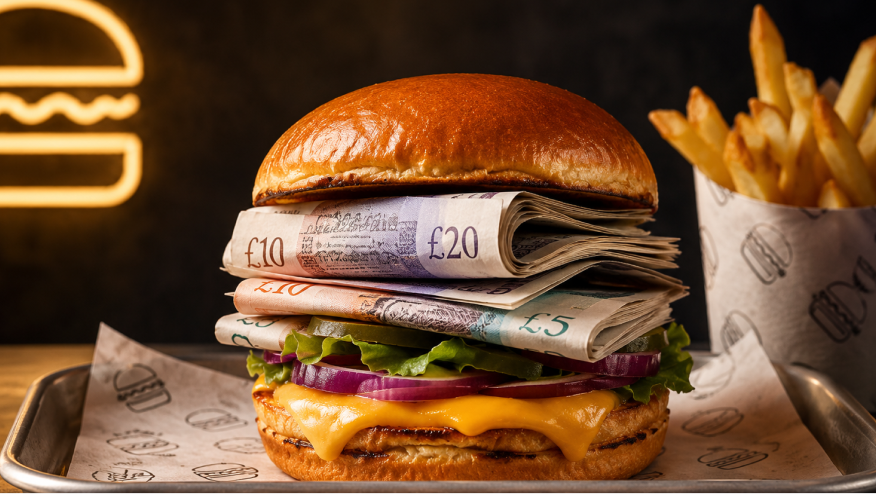
What happens when food and financialization meet, and what does it mean for flavor?
Over the past few decades, private capital has reshaped London’s food culture. It began in the late eighties after the Big Bang reforms, and gained pace in the 2010s after the financial crisis, when interest rates basically went to zero. In the 2020s, the double whammy of Covid and TikTok tastemaking changed the game even more.
The result is a spectrum of slick eateries, with vibes varying from food-as-a-commodity (Pret, Greggs) to sit-down-meal-in-Westfield-or-an-airport (Wagamama, Giraffe) to fancy-but-also-available-on-Deliveroo (Dishoom). There’s also food-as-a-service through subscriptions like Gousto, but that’s a story for another time.
The upside of this boom in leveraged restaurant groups is variety. Thanks to the ubiquity of these chains, London’s collective palate has probably never been broader.
One downside, though, is that financialization seems to be narrowing the field of restaurant ventures that can succeed. We get more diversity, but a lot of these experiences can feel uncannily similar, and those with the ability to scale often end up crowding out independents or forcing them to follow a similar conceptual model.
What does the UK’s penchant for PE-backed restaurants mean for the future of its dining culture? And in turn, what does this mean for the credit investors bankrolling this evolution? We’re already supposedly at ‘peak Greggs’, the Leon founder literally bought the chain back from Asda, and the owner of Franco Manca has just secured approval for a restructuring plan. Is this a turning point for the sector, or just business as usual?
To even begin addressing these questions, we must first evaluate where we are today. And that means sampling the taste of leverage ourselves. — Will Caiger-Smith
The Real Greek
In 1999, Theodore Kyriakou opened a restaurant inspired by his mother's cooking. He called it The Real Greek, and it was a hit. It expanded, was acquired by the PE firm Capdesia in 2023, and recently appointed Alvarez & Marsal to advise on restructuring or sale options.
We wondered what Kyriakou would think of the restaurant today, but persuading him to review his own restaurant for a specialist financial publication seemed like a long shot, so I drafted in my Greek colleague Alexandros to join me instead.
First, some more context. TRG joined the world of PE portcos in 2023, when Capdesia partned with Japanese firm Toridoll to buy Fulham Shore, which also owns the pizza chain Franco Manca for a reported £93.4m. Until recently, TRG had nearly 30 branches across the UK, but several are now closing as part of a restructuring, with the remainder being bought by Karali Group, which owns Côte Brasserie.
The one we visited is on the south side of the Thames, around the corner from Shakespeare's Globe and opposite St. Paul’s. The location screams ‘high footfall, prime location’ in a PowerPoint somewhere; there is a Pizza Express (backed by Bain) next door and also a Zizzi (owned by TowerBrook).
We noticed yellow highlights on the menu. They’re bestsellers, according to our waitress. Alexandros told me that yellow highlights on Greek menus usually denote frozen seafood.
Plates arrived swiftly, soon fighting for space on our table. We enjoyed the taramasalata, tyrokafteri (whipped spicy feta), and Greek salad. And we loved their EPSA peach iced tea, a Greek summer staple. The chicken skewers were solid, although Alexandros’s expert opinion was that they were too small. Meanwhile, the pork skewers were dry and the loukaniko (a traditional Greek sausage) was ‘generic and could easily be found in a German or British pub.’
The pita was good, although it was listed in the menu as ‘flatbread’, which feels like a trade-off between linguistic authenticity and accessibility. Halloumi popcorn was a genuinely new concept to both of us; there is no word, Greek or otherwise, for this concoction. The so-called ‘Greek Sangria’ (featuring Metaxa brandy) also left us scratching our heads. These are not real things.
Sadly, there was no sign of fava, a dip made from yellow split peas, served with diced onion, olive oil and capers. We also didn’t see any of the complimentary breads, dips, chips or small desserts which are typical of Greek hospitality.
In the past, TRG has instead favored gimmicks like olive oil shots and aubergine scavenger hunts. Maybe this is the kind of thing that helped the Bankside branch survive the strategic review. — Ryan Daniel
Leon
I started paying attention to Leon when its original co-founder, John Vincent, bought it back from Asda and publicly asked people to share their frustrations. That’s either brave or desperate. Either way, it made me curious.
Leon has always claimed that fast food can be healthy and delicious. Most places manage one, rarely both. To test the concept, I ordered the Paprika Chicken Super Salad with a double portion of chicken, zhoug dressing, baked fries and vegan aioli on the side.
I’m genuinely surprised no one told me to go to Leon for a quick bite sooner.
The chicken was tender and juicy — properly seasoned rather than being healthy by way of blandness. Underneath was a bed of vegetables, cauliflower and mixed grains that made the whole thing feel substantial but clean. The vegetables looked fresh too, not like wilted leaves that had been sitting around for too long. I left full but not heavy.
Another pleasant surprise: they serve fairtrade Karma drinks. It tastes different from your normal cola, but it’s made with natural ingredients. If you care about social responsibility, it’s a small but meaningful touch.
I spoke to a long-time customer, Tanara, who said her favourite grilled halloumi wrap hasn’t changed much over the years. She’s less keen on the touchscreen self-ordering kiosks — they can make it hard to see what’s actually on offer, especially when seasonal items rotate in and out. That said, introverts might love them, and from a cost perspective, fewer front-of-house staff probably helps keep prices under control. They also potentially increase sales.
The financial backdrop is less comforting. Vincent recently told the BBC that the chain is losing around £10m a year. After reacquiring the business, he appointed Quantuma as administrators and announced a major restructuring, closing around 20 high street restaurants. The strategy now is to pull back from struggling town-centre locations and focus on service stations, airports and train stations.
So I suppose the question remains: can healthy and genuinely delicious fast food actually be profitable? — Nicolle Liu
Franco Manca
I’ve just come back from a few days in Italy, so this review could be slightly biased.
For over 20 years after Franco Pensa opened a traditional pizzeria in Brixton Market in 1985, Franco Manca (Franco’s at the time) was the place to be for Italian expats in need of a good old “pizza e birra.”
Franco transferred the pizzeria to Giuseppe Mascoli in 2008, and it did the job for a few more years. In the 2010s, its introduction of the sourdough base was pioneering, elevating the standards of other UK pizzerias.
Then private equity arrived. In 2015, the brand was acquired for about £27.5m by Fulham Shore, a restaurant group led by David Page, who had previously overseen the massive expansion of Pizza Express (which ultimately led to a restructuring).
With Fulham Shore at the helm, the small menu was eventually replaced with a long list of ‘speciality’ pizza, including a Spanish salami chorizo-based and ragu napoletano pizza. All sorts of ‘I'm-really-trying-to look-Italian’ aperitivo are also the menu, alongside chicken salads and Scotch bonnet chile sauces.
At the Borough Market location, our chosen starter was a small dish that the menu identified as “Tuscan sausage, friarielli cream, mozzarella, Franco’s grana and crispy pancetta.” A couple of bites and enough please. Let’s move on to the pizzas.
The Franco’s OG Margherita was the real deal, the first thing that reminded me we were in an Italian place since we stepped in. You can’t beat the classics. Okay, maybe the tomatoes weren’t hand-picked in a South Italian village and the mozzarella wasn't from a small town in Campania, but hey — it’s a touristy area in London, you know you can’t have that here.
Then reality kicked in again. The second pizza was a Tre Porcellini, or the ‘three little pigs’ in English: Tuscan sausage (possibly the same as in the starter) with crispy bacon, hot honey, ‘nduja, basil and chilli threads on top of a yellow tomato base and mozzarella.
I had to pause and think. When was the last time I saw hot honey and bacon on a good quality pizza? Ah yes, not once.
Earlier this month, the group announced it would close multiple sites as part of a restructuring process. I wonder, had the chain kept a bit more of the original Franco’s, would it have fared any differently? — Alessandro Albano
Coq d’Argent
Mention Coq d’Argent to anyone over 30 who works in the City and they will probably raise their eyebrows and mention that its terrace is a notorious suicide hotspot.
Thankfully that’s not all it’s known for. It’s also a good restaurant, and on a recent Thursday lunchtime the terrace was the ideal place to celebrate the arrival of sunshine in London. Apparently many others had the same idea, including the fresh-faced coverage bankers on the table next to us and the gilet-wearing investors (all men, all of a certain age) behind. If my companion — also male, of a similar age, and wearing a gilet, but more familiar with agricultural feedstock than high finance — felt out of place, he didn’t show it; there’s space for all career paths at Coq d’Argent, it seems, so long as you are similarly attired.
You probably already know the food is good. It’s very French, the servings are quite small, and while it’s generally delicious, it’s also not hugely memorable. It’s not somewhere you go primarily for the food — you go because it has nice views and good acoustics for a business lunch, and because the surroundings are too nice for the food not to be equally good. It’s a classy but understated joint that is neither underwhelming nor overwhelming. It whelms.
And what of leverage? What of scale, and the trade-offs it can force? Coq d’Argent is part of Evolv, formerly known as D&D Hospitality, which has been backed by Breal Capital and Calveton since 2023. The group, which hired former Gaucho boss Martin Williams earlier this year, owns some other iconic London spots such as Quaglinos and German Gymnasium and is doing pretty well.
It is looking to expand, but for now there is still only one Coq d’Argent. A possible sign of cost-cutting was the undersized disc of butter that came with the bread, but let’s just say that’s a French thing; the only visible evidence of vertical integration or group synergies was the loyalty scheme card that was handed to me with the bill.
Aside from that, it’s basically the same as it was in the 2010s, where I used to drink wine well out of my price range with DCM bankers before returning the office to hazily scribe stories about Libor fixing, post-crisis parliamentary hearings and AT1 capital instruments. It was a simpler time, a time before pandemics, AI disruption and gargantuan asset aggregators.
The view from the terrace is now partially blocked by the hulking financial data palace across the street, but look west and you can still see St Paul’s. Some things never change, and that’s just fine. — Will Caiger-Smith
Gail’s
Coffee connoisseurs and Nimbies are already an opinionated bunch, but when it comes to Gail’s, the debate is livelier than usual.
Started by Yael (Gail) Mejia in Hampstead in 2005, Gail’s has expanded a lot since then and become something of a poster child for gentrification. It now has over 170 branches in the UK and uses an algorithm to assess potential locations — not all neighborhoods pass the Gail’s test, it seems.
Bain is the current backer, after an investment in its parent company Bread Holdings back in 2021. But the chain’s institutional investment goes back even further than that, to when Risk Capital Partners invested in the 2010s. Private equity ownership may be in its future too: the company reportedly hired Goldman Sachs as a sellside advisor at the end of 2025.
The vast cafe I’m visiting is in Elephant Park, formerly Heygate Estate until its 2011 demolition. It’s full of pastries, sandwiches, and laptops, and there’s an array of Gail’s merch on offer: branded cookbooks, spreads, granola, coffee pouches.
But one thing Gail’s doesn’t have today is coffee.
The machine is broken, to the surprise and frustration of some would-be customers. Maybe they’ll try the almost empty independent cafe around the corner instead, assuming they don’t fancy an elderflower iced matcha here. I see an elderly couple walk out, muttering.
I keep it simple and go for an English breakfast tea, which arrives in a classy ceramic teapot. I also order a sausage roll, mostly out of curiosity to see how it compares to the Greggs gold standard. A cinnamon roll completes my order.
The sausage roll is a real unit — wide with puffy pastry. The pork is spicier than expected, but I’m a fan. Topped with sesame and nigella seeds, it feels more upmarket than Greggs, but then again I did pay a fiver for it.
The cinnamon roll is surprisingly moist and not too sweet. It’s a worthy competitor to Nordic Capital’s Ole & Steen cinnamon social. Due to the sausage roll’s heft, I decide to wait a few hours before tackling the rest of it.
The to-go pastry comes in a brown bag specifically designed to look artisanal. It all feels a bit contrived for a chain expected to reach the 200-location mark over the coming years. As it expands, I wonder if the algorithm will have to settle for more ordinary locations? Scale and sacrifice can go hand in hand. — Ryan Daniel
Dishoom
First, a disclaimer: I’m an American who lives in New York, and to me, almost every London curry seems far superior to what we have stateside. So when I told people in our London office that I was going to Dishoom for the first time, the responses led me to believe I was in store for a life-changing culinary experience. People gushed (“OMG I love Dishoom. The ruby curry, their potatoes, the samosas. And the cocktails…”) and their eyes glazed over in silent reverie as they reflected on how life would never be as good as it felt while drinking a Pink Shiso Spritz.
I was going with my boss, Will, and embarrassingly, I hadn’t made reservations. I would learn, though, that Dishoom always saves a number of tables for walk-ins. After showing up early, I was pleased to hear that we could be seated with just a 40 minute wait. The restaurant was packed and bustling as I was ushered to the bar to enjoy a drink along with about thirty other stylish professional types who had also showed up without bothering to reserve a table and were more than happy to imbibe while waiting. I ordered from the special menu for high-minded teetotalers who prefer zero-alcohol pints and CBD-laced iced tea.
Will, who like myself has always aspired to a publishing career of true consequence and influence, arrived ten minutes later and told the hostess that we would be “writing a review”. Just five minutes later we were seated, certain — if only in our own minds — that our moment of recognition had finally arrived. We proceeded to order the greatest hits: Chicken Ruby, Gunpowder Potatoes, Prawn Pathia, Black Daal, and the standard sides.
The word “Dishoom" is the Bollywood equivalent of "pow!" like in the old hokey Batman TV show with Adam West. Co-founders Shamil and Kavi Thakrar chose it to emphasize how the experience was supposed to knock customers’ knickers off with its vibrance and pizzazz.
And they succeeded! They gained a reputation for such flavor and presentation that it elicited the type of salivating reaction consistent among my British colleagues. Dishoom grew to more than 10 locations. It popped up on Deliveroo , and suddenly was even more everywhere. In 2025 it attracted the attention of private equity, and L Catterton bought an undisclosed stake in August that year — valuing the company at approximately £300m and funding further expansion plans.
Hopped up on CBD mocktails and Kingfisher Zero, Will and I dove into a discussion about media and AI. Would humans be replaced, could they be? Should we care? Did our experience of consciousness really mean we had souls in the way that large language models did not? We heartily agreed that as journalists, humans, and artists, we indeed tapped into a greater stream of knowledge and sentiment than code ever could, and that Claude would never make a movie like Sirāt, nor could ChatGPT write a book as moving as Time Shelter.
Culinary artists like Shamil and Kavi had also tapped into something greater, evoking that “Dishoom” feeling in every aspect of dining. But somehow, this experience felt more tepid. Quality for sure, and maybe even reliable, but somehow dated, and not in the way that creates a delicious wave of nostalgia. More in a feeling of familiarity, the somewhat antiseptic nature of the finest that mass production has to offer. The love, the creative forces, the idiosyncrasies of the once-inspired Dishoom culinary experience — an experience that transcended the dining room to become a cultural window that collapsed space and time — has been systematized. Perhaps thus it has lost something ineffable which once connected it to our souls in a deeper way, and now only appeals to our physical selves, our tastebuds still obeying the intricate, rich flavors which force them to admit that yes, this food is delectable.
In some ways this transformation had already started to take place before the PE involvement, with the restaurateurs embracing England’s upwardly mobile and hip but also self-loathing culture of day drinking by opening up several “all-day bar-cafés” — called Permit Rooms — starting in 2023, offering more cocktails laced with gentle cannabinoids.
One of the founders, Shamil, reflected publicly after the L Catterton investment was announced about how all the success had come with real personal cost, emphasizing the pressure and exhaustion that comes with sustained growth. He admitted bluntly, “I feel I have never been so tired,” and added that he was “so tired that even babbling is wearying.” This almost bone-level fatigue after years of building the company is described as something felt rather than abstract; the pride of his restaurants being so “full of…life and warmth” comes with a side dish of burnout.
Dishoom is a quality product. It is popular. Both our stomachs remained extremely full, well after we each went our separate ways. For the entirety of my leisurely 30 minute walk home, I could still feel the Chicken Ruby sloshing around. And yet…I still felt empty.
Luckily, Dishoom is set to open up a New York location this year, so I can come back for more and more and more. — Max Frumes
Giraffe
Nearly 20 years ago, when I had just moved to London and was renting a bedroom for £400 per month, my equally poorly compensated girlfriend signed up to a mystery diner scheme that offered free meals at chain restaurants in return for anonymous reviews. One of the restaurants we reviewed was Giraffe.
Then, as now, I associated Giraffe with shopping centres and airports. After years covering credit, I now also associate it with Boparan, the leveraged chicken empire that owns it through its subsidiary Boparan Restaurant Group — so I jumped at the chance to review it again while waiting to board an overnight flight from Heathrow.
It’s tempting to say not much has changed, although I’m sure the menu has expanded and I’m newly appreciative of its kid-friendly decor (what child doesn’t like giraffes?). The general culinary theme, which I didn’t fully appreciate all those years ago, still seems to be “world cuisine”, the service is still friendly but businesslike, and the food is still charmingly cartoonish in its presentation, like a three-dimensional sandwich emoji.
Given the ownership structure, I felt obliged to order chicken. The skewer of white meat that arrived — nestled into the fold of a lightly toasted flatbread, garnished with an assortment of leaves and pickled onion slivers, and wearing stripes of zingy red and white sauce — was succulent and flavorful, a textbook example of industrial poultry production. It arrived a tad later than my colleague’s crispy duck salad (which I’m told was also tasty) but the waiter acknowledged the delay promptly and was attentive throughout. The whole experience was perfectly pleasant and the bill was acceptable for an airport meal.
Will Giraffe still be around in another two decades? If it isn’t, will anyone mourn its passing? It’s a strange animal, somewhat unique in its blanket bastardization of dishes from basically every continent and their optimization for a western palate, but at the same time deeply generic.
Does it need to exist? Even if it doesn’t, should it be allowed to anyway? Is it simply an example of financially successful cultural appropriation, or a harbinger of a fully globalised future in which borders melt away and all cuisines genuinely belong in the same kitchen?
Mr Boparan probably has a view on that, but these questions are too existential for a request-for-comment email. In any case, ultimately the market will decide. — Will Caiger-Smith
Gaucho
Deep in the bowels of a City basement, our Gaucho waitress confirmed that “100%” of their daytime clientele is business lunches. Which makes sense — you can only charge these prices when no-one is actually paying.
We arrived through an Instagram-ready tunnel of fairy lights. For the tourist crowd, presumably, that our waitress told us makes up their evening and weekend footfall. “Which crowd do you prefer?” I asked her; she diplomatically declined to comment.
Gaucho is part of Rare Restaurants, which was taken over by Investec and investment firm SC Lowy following a 2018 restructuring. Its sponsors have been seeking a new buyer in recent years, but reportedly getting few bites.
Few bites is what you can expect at Bank’s Gaucho, too, at least if you’re a vegetarian whose boss thought it’d be funny to send to review a steak restaurant. I’m not the target audience. There’s a dedicated ‘Protein Menu’ for the gilet gym crowd, and there’s bacon in the salad. The wagyu beef martini, in particular, feels targeted.
For the vegetable-minded, there are two picks: aubergine, of course, and a classic sympathy pasta dish. I went for the aubergine, since that’s long been a vegetarian’s only option at Bank-based business lunches and I want to give a fair assessment. It arrived deep fried and watery; I picked off the sauce and ate that by itself.
“Do you get many vegetarians?” I asked the waitress. They do not.
Maybe leaning into the UK’s vegetarian crowd would help, as Gaucho has reported hefty losses recently. My boss claimed the steak felt “neverending” (I wouldn’t know) so maybe that’s where they’re going wrong? That might be an easier fix than some others they are reportedly considering, like skimming their waiters’ service charge wins while boosting head-office pay, or skipping carbon offset payments.
The chips, at least, were solid.
I reached out to Gaucho to ask if they were still seeking a new private equity backer. They did not respond. I also asked if they’d be expanding their vegetarian menu. They didn’t respond to that, either. — Laura Thompson
Hawksmoor
Beefsteak holds a special place in the nation’s collective stomach. It’s the heart-warming nostalgia for a now sadly declined Britain, the warm Whiggery of ye-olde London dining clubs. And that’s what Hawksmoor sells: a specific slice of a protected cultural memory.
Perhaps for that reason Tommy Robinson was once asked to leave its premises — an outcome which, one imagines, surprised nobody involved. After all, there’s a reputation to protect.
Founded in 2006 by Will Beckett and Huw Gott, Hawksmoor envisaged something simple: well-butchered beef, with a mission to expose London’s finest to the best of British. In 2013, a majority stake was sold to Graphite Capital, purveyors of other fine establishments like the Groucho Club (and Wagamama, notching up 12.8x returns before it hit the high yield market).
My name is also Huw, and I was dining with another Will. Leaning into this coincidence, we decided to go back to where the founders began their meaty quest 20 years ago: the Spitalfields branch.
Herd mentality teaches us to follow what is most popular, and steak has become more accessible: meat was once the preserve of landowners, the aristos, the blue-bloods, but most can now buy a slab of cow from their local butcher/supermarket/Aldi without breaking the bank.
But there is still a hierarchy of beef, and within it, Hawksmoor rests somewhere between the delicate filet and the more provocative ‘strip’ (‘sirloin’ has less jazz, less poetry). Succulent, yet lightly flirtatious, and with a whiff of possibility. A beckoning misadventure.
And what are the choices? Big beef or little beef? A list of off-menu British breeds was handily chalked up on the wall. We decided to go big.
Here’s the lesson: grams look bigger on paper, so the size of the steak may disappoint you. But you would do well to embrace this — after the oysters, the horseradish and mackerel salad, and the scallops, we were pretty full by the time the main event arrived. Add the chips (done à la française, or in Queen’s English ‘chunky’) and the obligatory creamed spinach, and we were already halfway asleep. I loosened my belt a notch (or two, but who’s counting).
This is where heroes stand or, at the very least, wobble convincingly. A true adventurer avoids conventional definitions like ‘full’, and instead focuses on the task at hand: completion, or something in that general vicinity.
The real kick is that once this mammoth undertaking is complete, the staff pull a fast one and offer inescapable treats like ‘pudding’. Roll on the sticky toffee and meringue, even though at this stage you resemble something close to the actual Michelin Man. Add two Ferraris (that’s Campari and Fernet, our somewhat desperate digestif attempt) and you’ve finished the trip to overindulgence.
“Wow, it really adds up,” observed my companion when the cheque arrived. We managed to obliterate the £65-a-head budget suggested by the Guardian. Full of belly, thin of wallet, and nervous of our ability to expense the evening, we tottered out the door. “Nightcap?” I suggested to my usually solid fellow traveller. “No, or I think I might be sick.”
And that just about sums up the experience: you gorge and quaff to such a degree that, upon leaving, you have no more fight, no more vim. Further expansion is impossible.
Still, I can see myself returning. I’m a sucker for the punishment. If you really want Beef and Liberty, sometimes you have to put your gut on the line. — Huw Simpson
Editor’s note: We are aware this is not an exhaustive list, but our stomachs are only so large and we had to start somewhere. There will probably be subsequent chapters and we may expand to this concept to new geographies. Please email editorial@9fin.com if you have suggestions!
Further reading
Whining and dining (The Fence)
‘Every Leon should be magical’: food chain’s co-founder on what went wrong (The Guardian)
A million sausage rolls a day: has Britain hit peak Greggs? (FT)
Gaucho to slash waiters’ share of service charge and boost head office pay (The Guardian)
Private equity’s insatiable appetite for restaurants (Morning Brew)