Don’t miss out on news you won’t find anywhere else — get The Memo US and The Memo Europe in your inbox every two weeks.
The sudden bankruptcy of restaurant group FAT Brands, whose whole-business securitization noteholders allege its controlling shareholder misused funds, highlights the plight of investors who may have hoped this structure would protect them.
Coming hot on the heels of last year’s First Brands implosion, it also shows the heightened risk of standards slipping in hot debt markets where investors are under pressure to deploy cash.
Whole-business securitization has become increasingly popular among franchised restaurant groups over recent years, often enabling them to take on more leverage at lower interest rates than in the leveraged loan or HY bond markets. The likes of Subway, Domino’s, Taco Bell and Wingstop have all done whole-business deals in the years since 2022.
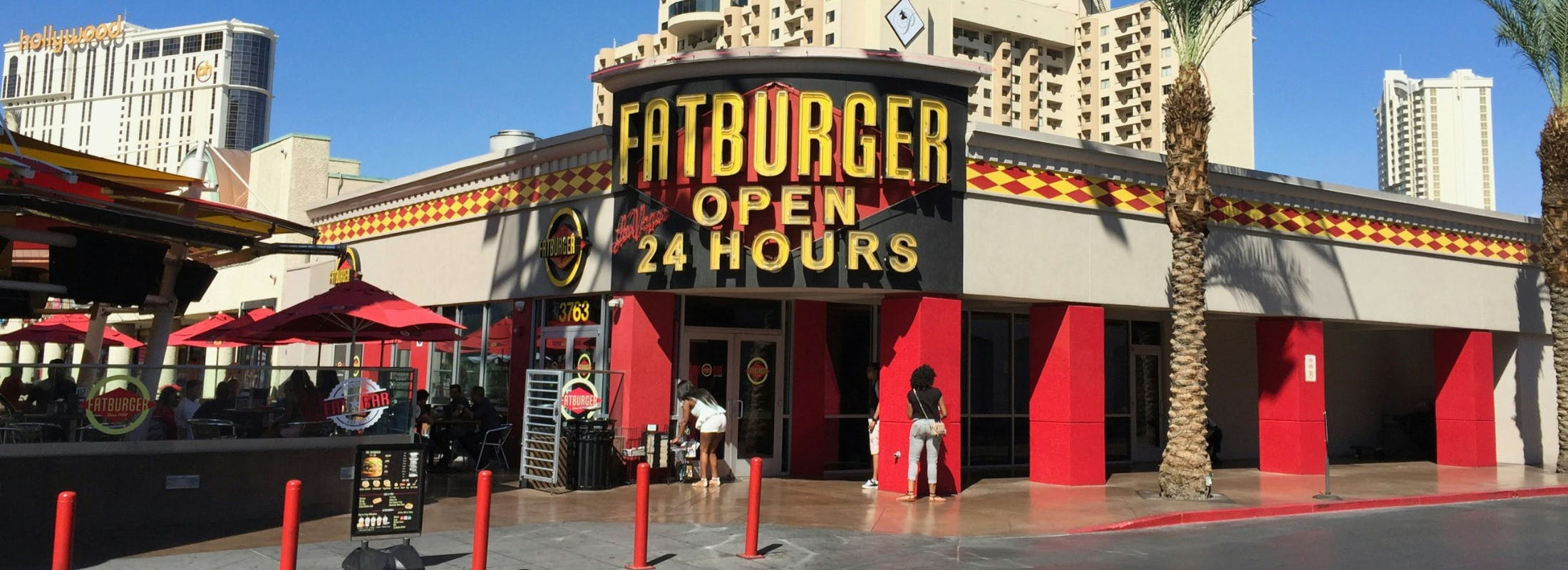
FAT Brands used the structure to finance a string of restaurant acquisitions between 2017 and 2023. The company now owns a slate of popular names like Fatburger, Johnny Rockets and Twin Peaks.
Whereas traditional ABS structures package pools of specific assets, such as consumer loans or accounts receivables, into debt investments, WBS deals package up entire businesses. Essentially, a company can take major business segments that generate positive cash flow and turn them into bonds.
Since these cash flows are isolated from the owner’s credit risk, WBS can enable issuers to lever up cash-generative restaurant groups on more attractive terms than a regular corporate loan.
For investors, WBS may offer attractive risk-adjusted returns and often more downside protection than traditional leveraged loans — partly because they are designed to create a bankruptcy-remote special purpose vehicle (SPV) which is meant to protect the noteholders’ collateral.
“There are more and more entrants to the space every year,” said Tracy Karaszkiewicz, head of ABS trading for US Bancorp.
Importantly, the structure is also intended to ensure the company has plenty of cash to fund operations, helping to avoid a cash crunch. Principal and interest payments are funded directly by cash flows from the business, while a system of collection accounts, capex facilities and structural triggers ensure the group can cover operating expenses.
But several recent bankruptcies — including TGI Fridays, Hooters, and now FAT Brands — have demonstrated not only that securitization investors may face a number of complexities when navigating a sponsor’s bankruptcy (and in some cases are far from insulated from it), but also that these supposedly ‘bankruptcy-remote’ vehicles can end up in a situation where they file themselves.
In the case of FAT Brands, all of the WBS SPVs filed alongside the sponsor.
So how did FAT Brands go bankrupt?
According to an ad hoc group (AHG) of securitization noteholders, which is seeking the appointment of an independent trustee to replace existing management, the company’s CEO skirted the control system intended to protect creditors, diverting cash away for his own use.
As of its Chapter 11 filing, the company had approximately $1.15bn in securitized debt outstanding through four whole-business securitizations. The structures also contain an additional $159m in residual notes.
Rather than one of the regular WBS arrangers like Guggenheim or Barclays, the company tapped Jefferies to structure these deals. The notes were also initially issued without credit ratings, though the company later procured ratings.
Under the WBS indentures, the SPV entities are bound by a priority payment waterfall. According to the AHG’s filings, this restricts the debtors’ ability to transfer revenues generated from the group’s franchisees and restaurants to other debtor entities without paying all amounts due under the prepetition securitizations.
This structure is in part why ABS and WBS have become popular with investors, especially when financing higher risk borrowers. “This structure is what allowed the Debtors to obtain a greater amount of financing at a lower interest rate than would otherwise be available in the corporate credit markets,” the AHG wrote in their motion.
In order to smoothly operate restaurant groups tied to securitized debt, FAT Brands entered into management contracts with the securitization entities in which Twin Hospitality and Fat Brands, as managers, receive fees in exchange for operating the businesses.
Because these securitizations include not just royalties from franchisees but actual operating restaurants themselves, the indentures structure the flow of cash so that certain crucial expenses are paid (sales tax, for example) before the notes’ trustee makes distributions, a source familiar with the structure said.
Under this system, restaurant collections are first deposited into a collection account where initial expenses can be paid. Then, on a monthly basis, they move to a concentration account where distributions to noteholders are made, according to the AHG’s trustee motion filing.
‘Looting’ allegations
But what happens if (as these lenders allege) the company’s CEO and controlling shareholder misuses those cash flows?
The AHG has accused CEO Andrew Wiederhorn of “looting” the company, treating it as his “personal piggy bank”. Among their allegations is that FAT Brands failed to deposit restaurant collections into the accounts when required, and used funds without following the waterfall payment structure.
Wiederhorn has also been accused of other misconduct in the past: on top of a 15 month prison stint for a $65m shareholder loan he took (and never paid back) to his previous company in 2004, a federal grand jury also indicted him in 2024. That 2024 indictment concerned allegations that he took a $47m shareholder loan from the current debtors into his personal investment company, Fog Cutter Capital Group, using the proceeds to fund lavish personal expenses — never paying it back, and failing to report it as taxable income.
"As I have said for years, there were no victims, no losses, and no crimes in this case,” said Douglas Fuchs of Gibson Dunn, who represented Wiederhorn in the criminal proceedings. “FAT Brands made loans to Fog Cutter for sound business reasons, and FAT's minority shareholders were fully compensated for their share of the loans.”
While federal prosecutors dismissed the criminal case in 2025, lenders claim nonetheless that there is “no question” that this $47m loan was taken and not repaid. Additionally, the SEC has an ongoing civil case accusing Wiederhorn of siphoning away roughly 40% of FAT Brands revenue for himself and family members.
The ad hoc group has also made allegations that Wiederhorn drained the debtors through personal indemnification payments against those charges, insider dividends to family members, consulting fees to members of the Wiederhorn family, lavish personal spending, and preferential bonuses to family members in the company’s c-suite.
"These charges were dismissed by the government, and the allegations in this lawsuit are totally divorced from the facts,” said a spokesperson for FAT Brands in an email to 9fin. “The reality is that these transactions occurred years ago and were disclosed long before any of these bondholders lent a dollar to FAT. Many of the named bondholders purchased $750m in FAT bonds after the government announced its investigation."
Separately, a former portfolio manager at Jefferies-backed hedge fund 352 Capital briefly served as FAT Brands’ head of debt capital markets, before stepping down to defend himself against 352 Capital’s claims that he orchestrated a Ponzi-like scheme while a PM, according to a report by Bloomberg. Jefferies did not respond to a request for comment.
Conflicting accounts
FAT Brands’s chief restructuring officer has said the company was forced to file for bankruptcy after securitization obligations, including penalty interest and loan amortization, starved the company of cash it needed to operate.
On the other side of the argument, lenders say the operating businesses generate sufficient income to support operating expenses, and that, with the agreed management fees, the parent should have been able to support the securitizations. As described in the company’s first day declaration, most of the operating businesses also had positive adjusted EBITDA (although we should note that positive adjusted EBITDA does not always equal sufficient cash flows!).
The bankruptcy highlights the particular tensions that arise between securitization creditors and managers over how cash should be used when a company is in distress. It also highlights the challenges securitization lenders can face trying to control the flow and use of cash coming out of securitization entities.
Where things really fell apart may have been in the failure to report on and verify funds entering and moving between the collection and concentration accounts. “Without [auditors] going in, the system wasn't broke as much as the policing of the system might need a little bit more effort,” said a source familiar with the situation.
Collateral damage?
Theoretically, this whole episode could create some negative taint for whole-business securitizations. However, there has not so far been much impact on prices and trading volume for whole-business notes.
The news “has not impacted any of what I would call the tier one whole-business issuers” so far, said Karaszkiewicz at US Bancorp.
It’s possible that the trouble here arose from a less conventional use of WBS, such as this deal’s lack of ratings at the time of issue and the checkered history of some of the individuals involved.
Still, market participants will be watching for any evidence that this kind of (alleged) behavior is more widespread in the WBS market, or that the way WBS deals are structured in any way enabled the alleged fraud.
The stakes are higher than they used to be. Restaurant WBS has become a far larger space in recent years, and deals like Massage Envy — a wellness franchisor that tapped the WBS market in 2019 and 2024 — show how the structure is branching out to other franchise-heavy sectors.
A sentiment has developed that “if you can securitize a franchise, you can be an ABS player,” one trader said. Depending on how the Fat Brands cases evolve, that theory could be tested.
The Chapter 11 docket for FAT Brands can be found here.