Javier Milei’s privatization push is reopening Argentina’s infrastructure to private capital. But turning investor interest into long-term financing hinges on credible contracts, predictable tariffs and stable foreign-exchange rules.
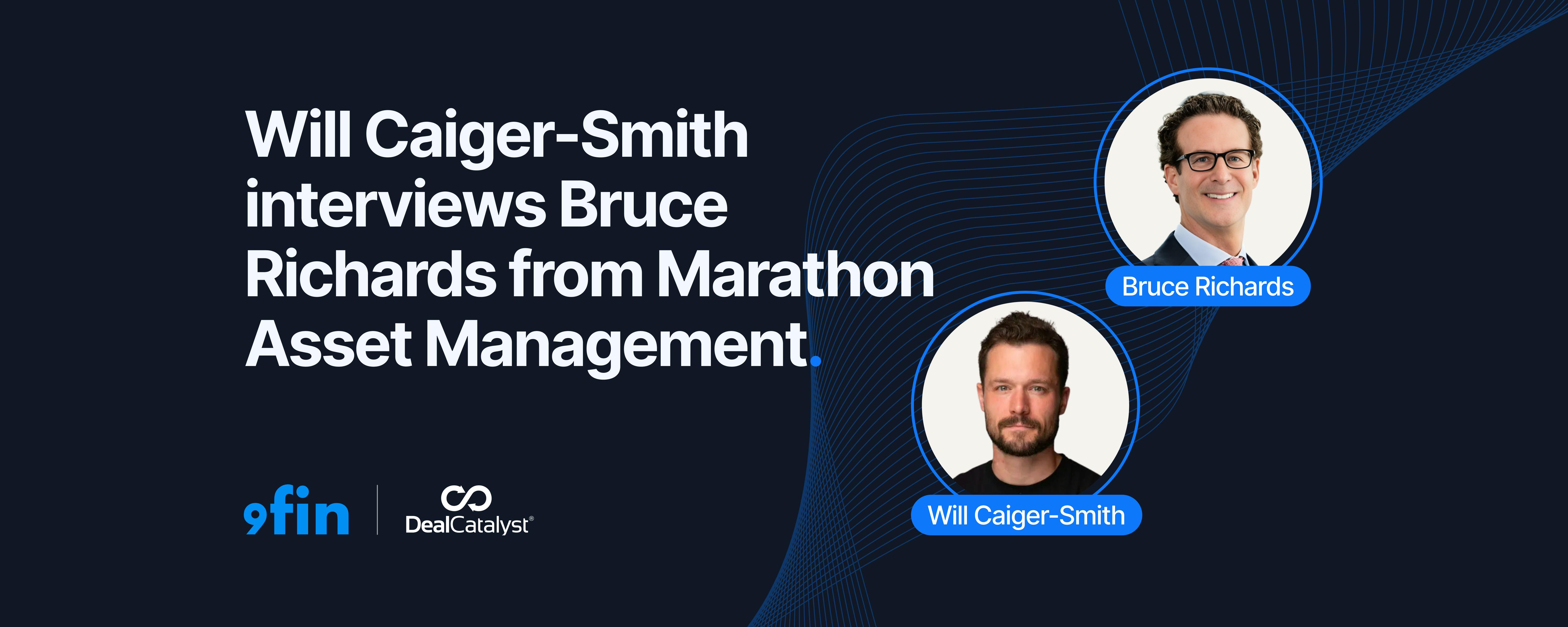
In this first episode of a two-part series, 9fin senior credit analyst Marina Varady joins Jimena Vega Olmos, a partner at Beccar Varela, Gonzalo Santamaría, a partner at Marval, and Gustavo Kopyto, a board member at TGN, to assess opportunities across privatizations, concessions and new projects.
Oil, gas and mining are top of mind for investors, with export revenues and RIGI protections helping mitigate Argentine risk. The discussion also covers AySA, road concessions and planned high-voltage transmission tenders.
Kopyto draws on TGN’s experience with frozen peso tariffs and dollar-linked debt to explain why respecting contracts matters. Vega Olmos outlines the return of project finance, where repayment depends on project cash flows, long-term offtake agreements and robust security packages rather than primarily on a sponsor’s balance sheet. Santamaría, in turn, highlights opportunities in export-oriented oil, gas and mining projects, while emphasizing the need for regular tariff adjustments and predictable regulation to sustain public utilities.
The Vaca Muerta Sur pipeline provides a financing precedent, combining sponsor equity with a bank consortium loan involving JP Morgan, Citi and Santander. The guests discuss how capital markets, sponsor support and multilateral guarantees could fund larger developments, drawing lessons from RenovAr and Genneia. They also examine why regulated utilities require stronger protections against tariff intervention, and why local participation in Transener need not signal foreign investor retreat: domestic investors can demonstrate confidence before international capital follows.
Thanks for listening and watching. If you have any feedback on this episode send us a note at podcast@9fin.com. Look out for the second episode, which delves deeper into RIGI, among other things, in the near future!
Listen on Spotify | Listen on Apple Podcasts
Episode Transcript
MARINA VARADY:
Hello and welcome to 9fin’s Latam-focused Nube 9fin podcast. I’m Marina Varady, Senior Credit Analyst, and today we’ll be discussing Argentina’s latest privatization push.
Under President Javier Milei, the country is once again looking to bring private capital into strategic sectors of the economy — from energy infrastructure and transport logistics to utilities. For investors, the key question is not only what is being sold, or at what price. It is whether this new wave of privatizations can improve fiscal dynamics, attract long-term investment, and create opportunities that are both profitable and sustainable over time.
To unpack all of this, I’m joined by three guests:
Jimena Vega Olmos, a partner at Beccar Varela, is a corporate lawyer with more than two decades of experience advising on energy, oil and gas, project finance, public utilities, administrative law, and international arbitration, with a strong track record in complex contract drafting and negotiation.
Gonzalo Santamaria, a partner at Marval, is a regulatory and energy lawyer focused on public and administrative law, infrastructure, electricity, public utilities, and government contracts. Over the past 15 years, he has advised important clients on energy projects in Argentina.
Gustavo Kopyto is a board member at TGN and an independent consultant with more than two decades of experience at Techint. His background spans steel, energy, transportation, and renewable energy projects, with expertise in corporate finance, business valuation, infrastructure financing, and relationships with multilateral institutions.
Just a quick note before we begin: while this introduction is in English, the conversation itself will be recorded in Spanish. A video version with English subtitles is available exclusively to subscribers on the 9fin platform.
Let’s get started.
Welcome, Gonzalo, thank you very much for being here with us!
GONZALO SANTAMARÍA:
Thank you very much for the invitation.
MARINA VARADY:
It’s a pleasure. For an investor looking at Argentina today, what would you say is the main appeal of this new wave of privatizations and concessions?
GONZALO SANTAMARÍA:
I think it is difficult to generalize across privatizations and concessions or identify a single main appeal. Within this package of divestments that the government is carrying out in order to step back from economic activity and make room for private investment, there is a fairly diverse set of assets. On the one hand, there are more general assets, such as highway concessions. On the other hand, there are strategic assets, such as the concession for the Paraná-Paraguay Waterway, or the reprivatization process for AySA. These are processes for which there may not be much comparable competition elsewhere in the region. AySA serves a number of users that very few companies in the world serve, and the Waterway concession involves dredging a river system whose level of complexity is matched by very few rivers worldwide; it competes head-to-head with the Mississippi. So it is difficult to say that there is a single appeal. It seems to me that the appeal is highly specific to each sector. Again, you have highway concessions, energy assets—a very varied mix, making it difficult to identify just one attraction. Broadly speaking, I think what is sparking interest among local and foreign investors looking at these processes is the path toward normalization that Argentina is following, in my opinion very successfully. Each type of asset will have its own challenges, but each also presents many opportunities, which is why they are attracting so much interest.
MARINA VARADY:
Gustavo, many thanks for being here on our podcast.
GUSTAVO KOPYTO:
It’s a pleasure.
MARINA VARADY:
Great. For an investor looking at Argentina today, what’s the main appeal of this new wave of privatizations and concessions? Cheap assets? Change of investments? Early opportunity arrival, a favorable price amid expectations of improvements?
GUSTAVO KOPYTO:
Well, it’s difficult to choose between those three because the combination is what gives the edge. I think assets are still cheap. There are many opportunities that will emerge from the businesses that will be established. There’s a path, so also, the early adoption or early arrival are a plus. I think it’s a good time, obviously it’s Argentina so we are all looking at continuity. It seems that the big advantage is that society is supporting it, that’s evident, and that should sustain over time a path of a continuous progress, for example, this will be the first year in which there will be growth followed by another year with growth.
MARINA VARADY:
Tell us about your experience working at Techint, being director of (gas transmission company) TGN. We think about the end of the convertibility in the year 2001-2002. We remind our listeners that back then the government pesified tariffs at the level of one dollar per peso, the convertibility level, and tariffs were frozen for a long time, while TGN had a significant portion of its debt in dollars or tied to the dollar. Thinking ahead, what mistakes shouldn’t be made again? What things could be done differently moving forward?
GUSTAVO KOPYTO:
Well, fulfilling contracts is essential and as I mentioned before my view on society, which is widely shared, broadly seen and also confirmed in elections and public opinion, is that respecting contracts is key. Argentina must take a long-term path to show it. The willingness is there, the opportunities are there, there are mechanisms like the RIGI that commit to stability in that case at that time we suffered a lot because not only the debt but also costs increased in dollars, local costs, because convertibility was abandoned and costs kept rising and prices remained frozen in pesos. That ultimately, after a lot of struggles, was resolved in some way. And well, we’ve reached here. Most of the concessions were maintained thanks to the contribution, the patience, and the reconversion that some governments were able to provide, in that sense, the involvement of local investors and operators helped with the continuity of these businesses and somehow they managed to sustain them. In some cases better than in others. Some foreign investors remained, others withdrew and handed the business over, but if we look at each concession individually, in the vast majority of the cases they were sustained in the end.
MARINA VARADY:
Right. And you were just mentioning the RIGI . Where do you think that the most interesting opportunities are at this moment?
GUSTAVO KOPYTO:
Well, it’s pretty much Vox Populi. There are infrastructure issues in Argentina, so infrastructure projects are an opportunity, the opportunity to increase those assets and the needs that arise. The sectors are quite clear, but there are also opportunities beyond privatizations in services associated with privatizations, which is a very interesting sector. If you look at practically the entire arc of the Andes mountain range, all the provinces from south to north that are alternatively seeing either a mining or energy boom, complementary services are bringing a lot of work and good associated businesses, we also need to look at that.
MARINA VARADY:
Where do you think the most interesting opportunities are today?
GONZALO SANTAMARÍA:
As with the previous question, it depends. The most dynamic sectors of the economy today are those with export potential. Oil and gas and mining are the two most dynamic sectors. In oil and gas, Argentina has more than 100 years of industry experience and has the Vaca Muerta formation, which stopped being merely a promise many years ago and became a real, concrete activity that attracts billions of dollars in investment every year. Now that Argentina is beginning a process of macroeconomic normalization and somewhat clearer rules of the game, we have a window of opportunity—one that is narrowing—to unlock the value of that asset. I think this is one of the most dynamic sectors. As lawyers, we receive daily inquiries about new projects or expansions of existing projects, and about scaling up what many international and local companies have already been doing for more than a decade. Mining is another extractive industry with significant export potential, and I think Argentina has a historic shortfall there. If one looks at the exports of countries such as Peru or Chile, with which we share the same geological formation, it is disappointing to see how many minerals they export compared with us. I am not a geologist, but it seems very difficult to believe that all the minerals ended up on the Chilean side of the Andes and that there is nothing on our side. Several large, world-class copper projects appear to demonstrate the contrary. Here again, I believe the government is moving in the right direction by making the regulatory adjustments needed to unlock very significant investments. Those are the two most dynamic sectors we are seeing. From the standpoint of tenders, privatizations, and concessions, there is also considerable activity. Two years ago, the Bases Law was enacted, under which Congress gave the executive branch a mandate to privatize a number of companies. Over these two years, the government has moved forward—faster in some cases and less quickly in others—but it is moving in the right direction to fulfill that mandate to divest and step back from economic activity by selling those assets and transferring them to private operators. That is broadly what began in the 1990s, followed by 30 years of zigzagging. Another traditional sector that generally performs well is agriculture. I think it is the foundation of the Argentine economy, although it has been somewhat overlooked in terms of supportive measures. My understanding is that the political decision was: let us help the sectors that need an initial push, and at another stage try to help the other sectors achieve even better returns. People in agriculture are probably not very happy about being excluded from RIGI, but I imagine the decision was that, since agriculture is already doing well, the immediate focus should be on mining and hydrocarbons, and later the government can try to give some relief to the sector that has sustained Argentina’s macroeconomy for 150 years. These are policy choices. At least in my case, I do not have all the information that is analyzed when such decisions are made, but I do not think everything can be done at the same time, so choices have to be made about whom to help first.
MARINA VARADY:
And on the flip side, which sectors do you think investors should approach with caution for now?
GONZALO SANTAMARÍA:
It is difficult to say. I do not know whether there are sectors where one can simply say, ‘This sector is difficult; proceed cautiously.’ Broadly speaking, Argentina faces the challenge of making businesses viable when they do not depend on exports. The clearest and most tangible example we deal with every day is public utilities. Public utilities have regulated revenues, generally determined through tariffs, and in an inflationary country such as Argentina, if those tariffs are not adjusted, the business can very quickly become extremely difficult to sustain. If one looks at the measures that have been taken, they are aimed at mitigating that tariff risk. I would not necessarily say ‘caution,’ but these are projects that generally require a deeper understanding of regulated markets and continued discipline in maintaining regular tariff updates and predictable regulatory frameworks. Argentina has a history that sometimes works against it. To show that the country is reversing that history, it may need to build a track record over time, and that is difficult to establish in just one or two years.
MARINA VARADY:
Hi Jimena. Thank you for being here with us. Where do you think the most interesting opportunities are today in privatizations, concessions, and new projects?
JIMENA VEGA OLMOS:
What we are seeing, and what is also visible in the press, is that the strongest sectors today are energy - mainly oil and gas - and mining. What makes these sectors more attractive in the short term is that they enable export projects. When export projects are combined with benefits such as those offered by the RIGI, which allows part of the cash flows to remain abroad, the traditional Argentine risk of recent decades is reduced considerably. That is why we are seeing so many mining projects involving lithium, copper, gold, and other resources, as well as energy projects, especially in oil and gas. The power sector is also extremely interesting because it allows for long-term contracts. The difficulty is that, under Argentina’s framework in recent years, energy exports have been very restricted and are also structurally limited, so the export potential of those projects is lower. There is considerable interest in the forthcoming tender program for the construction of high-voltage transmission lines, which we are waiting for. Those projects have certain limitations when compared with export projects, but they are also likely to be a major part of what comes next. Argentina has substantial generation potential, but, as in many countries, transmission constraints currently limit how much energy can be injected into the grid. The upcoming tenders are not limited to those areas. There is currently a tender involving AySA, the water and sanitation company. A railway tender is also expected, and a number of infrastructure projects are under review, some of which have already been submitted under the RIGI. With the new regulatory framework and a policy that seeks to be more investor-friendly, I think opportunities are opening in many areas. But mining and oil and gas projects are at the top of the list today.
MARINA VARADY:
And looking at the other side of the picture, are there any sectors where you think investors still need to proceed cautiously?
JIMENA VEGA OLMOS:
Anything that depends more directly on, or has a greater impact on, the micro - retail, for example - is obviously more difficult today. In infrastructure, the projects that are more challenging, or that investors scrutinize more carefully, are in highly regulated sectors where revenue is directly tied to regulatory intervention, such as electricity distribution and gas distribution. Electricity transmission is also concessioned but the government announced that the model for the next infrastructure tenders will use 100% private financing, repaid through a tariff, or, more precisely, a charge paid by demand, with protections intended to limit state interference. The recurring issue, particularly in difficult periods or during election cycles, is that all governments, regardless of political orientation, treat residential end-user tariffs very cautiously. In recent years there has been a tendency to hold those tariffs down. Electricity generation may be a more deregulated business, but if a generator cannot pass through its generation costs because the distributor cannot pay them due to frozen tariffs, generation is affected as well. Something similar happens in gas, and that was a problem several years ago. The more regulated the price is, the more caution is required and the stronger the protections must be to generate the same level of interest as less regulated activities.
MARINA VARADY:
Understood. What financing options are available for these kinds of businesses?
JIMENA VEGA OLMOS:
The projects we see in these sectors are generally capital-intensive, very long-term projects. They require a great deal of investment. One structure that is beginning to reappear - it is not new to Argentina, but it was less common in recent years - is project finance. The main distinction in project finance is that repayment does not depend primarily on the borrower’s balance sheet, but on the strength of the project itself. The loan is repaid from the project’s cash flow, rather than from assets the borrower already owns. For these projects, the sponsor typically creates a special-purpose vehicle that separates the project’s risk from the sponsor’s other activities. These vehicles are usually newly formed and have no prior operating history. In those structures, the lenders’ outcome depends essentially on the project’s success and its ability to generate the expected cash flows. They therefore require a much more complex arrangement than an ordinary corporate loan. The contractual structure is highly sophisticated and includes not only the loan agreements but also the entire security package. In a project finance transaction, the project effectively pledges everything down to its DNA, and the banks need to be satisfied that the project will succeed because otherwise they will not be repaid. In addition to the complex contractual structure, there are usually numerous advisers: insurance, financial, environmental, and legal advisers who support the lenders throughout the structuring process and over the life of the financing. These structures are widely used around the world and have also worked well in Argentina, but they require certain basic conditions that we have not always had. One is long-term legal certainty. Another, in an ideal world, is the absence of capital controls. In a less-than-ideal world, capital controls at least need to be more flexible and less variable. From this perspective, Argentina’s major problem in recent years was that the rules changed every week. It is extremely difficult to structure a long-term business that depends so heavily on cash flow when regulations issued one Thursday could have a major impact from one week to the next. Without that stability and some basic foreign-exchange guidelines, it is very difficult. By 2019, several project finance transactions had been completed, especially in renewables, and they originated without capital controls. Capital controls returned in September 2019, and all of those transactions had to be reworked. At the same time, rules were issued that allowed them to remain viable. Although they had to operate within a capital-control regime, that regime had certain basic rules that gave lenders some comfort. Now what we are seeing is a new regulatory framework and the government’s policy of deregulating a significant number of areas. Project finance needs a secure cash flow. One of the key elements is a long-term contract for the sale of whatever the project produces - an offtake agreement. The lender, like the investor, must be confident that the contract forming the basis of the project’s cash generation will remain in place over the long term without obstacles or intervention. The regulatory changes we are seeing, with the RIGI playing a fundamental role, substantially strengthen that part of the project. That is why these structures are starting to return. A recent example, although not a textbook project finance transaction, was the financing of the Vaca Muerta Sur oil pipeline (VMOS). By Argentine standards it was enormous, with participation from many international banks and funds. It was made possible in part by these basic conditions and guidelines, and by the protection of the RIGI, which was crucial to closing it. Many of the projects now appearing in the press are analyzing similar financing structures.
MARINA VARADY:
Regarding financing structures, what types of financing structures are available for projects now?
GONZALO SANTAMARÍA:
Yes, project financing is the main challenge. Argentina remains an emerging market and is trying to move away from that position in order to reduce its cost of capital. In the projects we have seen so far, financing consists of a combination of capital-markets funding and a degree of project finance. One very positive precedent is the financing of the Vaca Muerta Sur (VMOS) project. The oil and gas industry participants in that vehicle secured financing that, in terms of ticket size, is historically the largest in Argentina for a project of this nature. It combines equity contributions from those participants with a loan from a bank consortium that includes JP Morgan, Citi, Santander, and other financial institutions. I think that is the path forward: a form of project finance adapted to Argentina, with some support from the sponsors as well. Argentina has a very active capital market, both locally and internationally. Looking at regular issuance, deals continue to come to market, and the market regulator is working to sustain and improve that activity. In the international market, Argentine energy companies in particular are achieving very good results at attractive rates. As the largest projects evolve—for example, LNG projects or copper projects, whose scale may be so large that even the local or international capital markets are insufficient—it is very possible that financing will involve a combination of sources. Another area that is not very active today, but that we hope will participate as normalization advances, is local financing through bank consortia or syndicated loans that help companies navigate the initial project period until they complete arrangements for the larger financing needed for development.
MARINA VARADY:
Right.
GONZALO SANTAMARÍA:
The signals we are seeing are positive. Hopefully that will continue. We may see a great deal of news during the remainder of this year and next year that will help us understand how these projects will be financed. For now, many are still at the theoretical design stage. Apart from the Vaca Muerta Sur (VMOS) case and a few isolated examples, there are not many major project-finance precedents of the kind seen in Argentina—or that my partners tell me were seen in Argentina—between 1995 and 1998. Argentina does not have a very extensive history of project finance.
MARINA VARADY:
And do you think there is a role for multilateral institutions?
GONZALO SANTAMARÍA:
Yes, I think multilateral institutions have a very important role to play in several capacities. First, particularly in concession and privatization processes, they can provide guarantees to the national government, which I think sends a very positive signal. Something similar occurred in 2016 through 2018, when the World Bank provided a guarantee to reduce the risk associated with certain renewable-energy contracts awarded at that time under the RenovAr program. A similar structure could be replicated in some of the projects the government is launching. Multilateral institutions can also support investors. They can play a very constructive role not only because they may offer competitive rates, but also because their involvement can facilitate the participation of private financial institutions, which may take greater comfort from the presence of a multilateral institution and from the resulting improvement in bankability. So I believe they do have a role. They have already been playing it; we have evidence of that and have seen them very active in recent years. Hopefully, that role will continue and become even more significant.
MARINA VARADY:
And what funding options are there for these businesses? Is there any role for multilateral organizations, or Project Finance?
GUSTAVO KOPYTO:
Yes, without a doubt multilateral organizations are expected in Argentina to be a kind of beachhead, and like they say, support mobilizing private capital. It’s a key role and they’ve always been attentive and have been the first to react to market turns in Argentina. Hopefully we achieve greater sophistication in certain tools that support the development of capital markets and Argentina’s big bet has always been to get Argentinians to invest in appropriate schemes all the money that is typically called “in the mattress,” kept outside institutions.
MARINA VARADY:
Sure.
GUSTAVO KOPYTO:
That is a big challenge, there is an interesting pool of money there, the government is very aware of it, they know very well how to go after it, well, it also takes time, trust, we have to maintain the momentum.
MARINA VARADY:
Right. I was thinking about the role of multilateral organizations. There was a mechanism used during the time of the Renovar plan for renewable energy, which involved guarantees. For example, Genneia is a company that used it. Do you think there might be room for a similar mechanism?
GUSTAVO KOPYTO:
Yes, definitely. Also export credit guarantees from agencies selling supplies or technology. Multilaterals can also offer guarantees, in fact it’s what they contribute the most, they rarely fund themselves or they fund marginally. They provide guarantees and the umbrella that accompanies the mechanism we mentioned earlier that enables private capital to join with multilaterals doing the fronting or paving the way. Big investments require everyone to work together with export credit agencies, multilaterals, private banks, some of which are very specialized and that have also renewed their internal capabilities, the human capabilities that were a bit lost. With renewables, project finance was re-established, but not all projects are suitable for project finance. Hopefully we’ll start to see more activity of that nature. I’ve been a professor of project finance at some universities and suddenly there was a lot of interest in the subject and for other extended periods, there was nowhere to deploy it and we discussed it for neighboring countries and it was not applicable in Argentina. At the very least, what is needed is continuity and belief in long-term contracts in dollars or hard currencies and that requires also the setting up of models. It’s very important for regulatory frameworks to be thought through and that even the private sector participates by assisting in the type of documentation, the type of structure needed so that then the projects can be bankable in unusual but viable models that we have had every now and then in Argentina. I think it’s coming. There has been movement for some time now. And we’ve also seen a number of private companies, mainly established companies, not Project Finance, go to market even below Argentina’s risk. There are some very interesting developments in terms of economic theory and the literature which seem to contradict that and that also points to a trend of steadily improving financial conditions for Argentina over time.
MARINA VARADY:
Should the greater presence of local groups in certain processes, such as Transener, be read as a positive sign because these groups understand Argentine risk better, or as a sign of caution among foreign investors?
JIMENA VEGA OLMOS:
To me it is essentially neutral. Argentine investors obviously know Argentina, they know its ups and downs and how to operate here in both good and bad periods. It is therefore logical that they would be the first to participate. It also depends heavily on the sector. In oil and gas and mining projects, there are local investors, but there are also many international investors. Transener is an electricity-transmission business and therefore involves the issues we discussed earlier. In processes like that, it is quite logical for Argentine investors to move first. The same is true of road concessions, where the bidders in the most recent tenders were generally Argentine players. I do not see that as necessarily negative. In fact, after the most recent change of government, when the RIGI and the other reforms were being developed, because the RIGI was not the only reform, when you talk to foreign investors and foreign law firms, it’s a bit like the world wants to see (what happens). It’s like asking a foreign investor to trust you without first showing that you trust yourself. In any country that has experienced the kinds of issues Argentina has, it is natural that, even as it returns to a more open and internationally oriented framework, local investors will be the first to act. They know the market, and their participation signals confidence in the changes we want to promote to the rest of the world.
MARINA VARADY:
Right. So it is a first step toward...
JIMENA VEGA OLMOS:
If you are a foreign investor and someone invites you to invest, trying to persuade you that things have changed, you do not live in Argentina and you may not know Argentina. The first thing you will look at is whether local investors, who do know the country, believe what you are being told. We have discussed this often and have been asked about it many times. We do not see it as negative. It is logical, it is natural, and it is a good way to show foreign investors that we genuinely believe things are being done in the way required to make these projects viable.
MARINA VARADY:
That brings us to the end of today’s discussion on Argentina’s upcoming privatizations. A big thank you to Jimena, Gonzalo, and Gustavo for joining us.
9fin will continue to monitor developments, with our full coverage available on the 9fin platform.
Thank you for listening and watching.