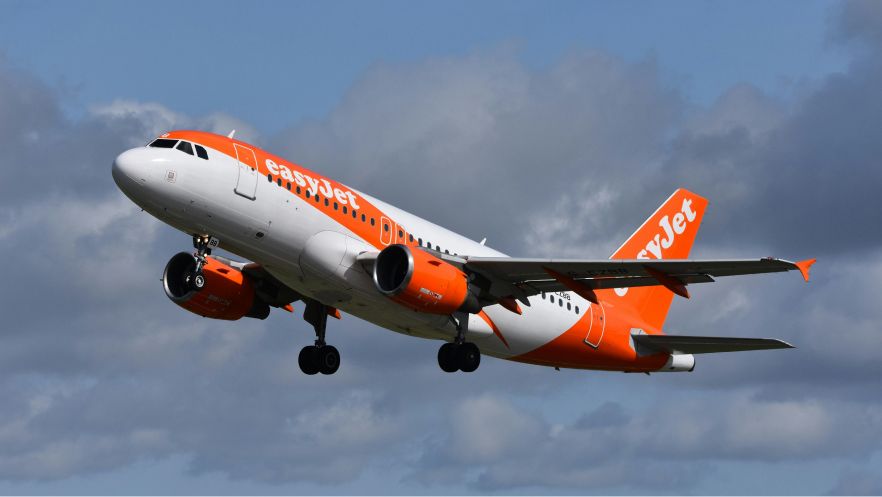
Barclays, Citi, Standard Chartered, Lloyds and Crédit Agricole have provided £3.5bn of bridge-to-bond facilities to fund Apollo’s planned £5.7bn takeover of low-cost British airline EasyJet, according to the commitment letter.
The bridge, which has a one-year tenure, will be later refinanced by a high yield multi-currency offering split between £900m-equivalent of euro FRNs, £1.6bn-equivalent of euro SSNs, £500m of SSNs and £500m-equivalent of dollar-denominated SSNs.
But this could be appreciably reduced by “Aircraft Take-Out Financings” against EasyJet’s £5bn book value in owned aircraft, as the deal documents outline.
The financing line goes alongside a £1.3bn multi-currency revolving credit facility provided by the same pool of banks, the document said.
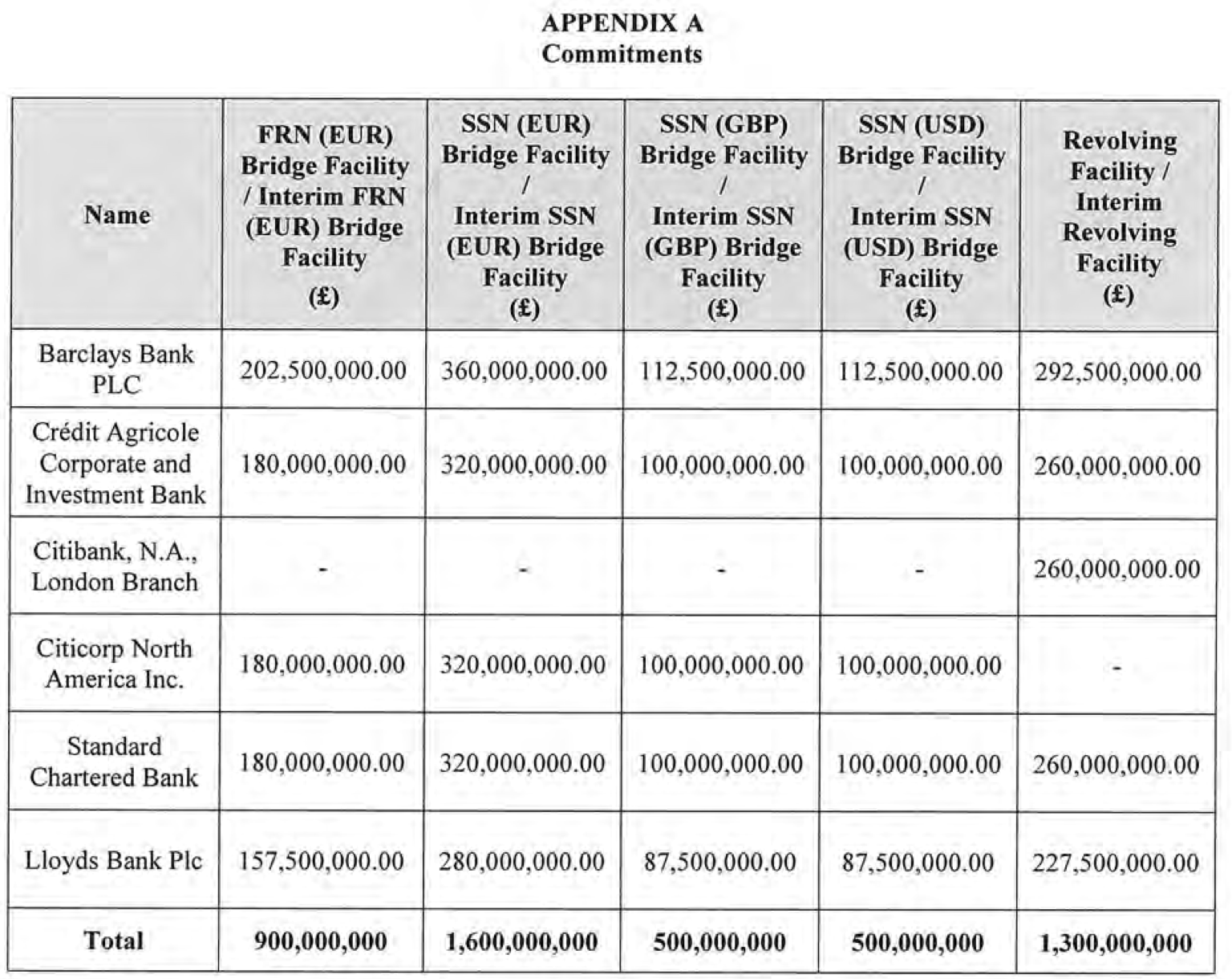
Commitments for each tranche. Source: EasyJet
The commitment letter indicates that the bonds will include a portability feature, which allows the debt to survive a change of ownership, and the right to redeem 10% of each series at 103 during the non-call period.
They will exclude the covenant affecting limitations on dividends and other payment restrictions affecting restricted subsidiaries and the limitation on impairing the security package.
The budget airline can incur pro-forma EBITDA adjustments for a “substantial increase” in energy or resource prices; for the “impact of artificial intelligence and related new technology”; for disruption to international postal, air or shipping traffic; and for “tariff or barriers on trade imposed by any government”.
Following the board’s recommendation of Apollo’s offer, and the withdrawal of Castlelake from the competition, Moody’s downgraded the budget airline to Baa2 citing “a material deterioration of easyJet’s credit profile”.
According to the rating agency, “the transaction introduces substantial uncertainty around the airline’s conservative financial policy”.
Aircraft financing
The buyout documents show that Apollo is already looking at options to monetise EasyJet’s large owned aircraft fleet.
The airline’s H1 results disclose a £5bn book value of owned aircraft — a fleet which it has been adding to. In its FY 25 results, it disclosed that it had brought eight leased aircraft into ownership. At this point, it had a total fleet of 356 aircraft, of which 205 were owned and the balance leased.
There are a variety of possible financing structures which use the aircraft as direct security, and the financing documents so far are agnostic between them.
A defined term “Aircraft Take-Out Financing” means “any debt or debt-like financing (of whatsoever type or nature and including, without limitation, any enhanced equipment trust certificate, leasing, operating lease with call option, sale/leaseback transaction or any similar arrangement)”.
This will cut the size of the debt package taken out in public bond markets — without incurring early redemption fees — and the fee letter itself specifies that banks will get their commitment fees even if an aircraft-based financing cuts the size of the HY bond offering.
EETCs — Enhanced Equipment Trust Certificates — are a specific form of secured funding generally used by airlines themselves, relying on Section 110 of the US bankruptcy code to segregate aircraft from the airline credit.
There’s a specific provision for an EETC Aircraft Take-Out Financing in the HY engagement letter for the easyJet buyout, indicating the terms on which this may be implemented, as allowed by the bond documentation.
This sets out terms for any potential EETC. It specifies that “in respect of any class A series, [it will have] a balloon repayment at maturity of no less than 15% of the aggregate principal amount, with the balance split on a straight line basis (provided that the applicable rate of amortization shall be halved for the first 2 years) and (y) in respect of any class B series, [there will be] a weighted average amortization of no more than 7.00% per annum across any such class B series”.
The major aviation lessors tend to use lease securitizations rather than EETCs for funding — as is the case for two Apollo-owned platforms. Apollo’s Perseus Aviation did its latest lease deal in January, MAPS 2026-1 Trust, while PK AirFinance was in the market in July with PK ALIFT Loan Funding 9, a loan ABS.
Apollo’s former rival for control of EasyJet, Castlelake, is also a major aviation finance player. It combined some of its activities in the market into a platform called Merit AirFinance last year, which issued its debut ABS earlier this year, Merit 2026-1.